
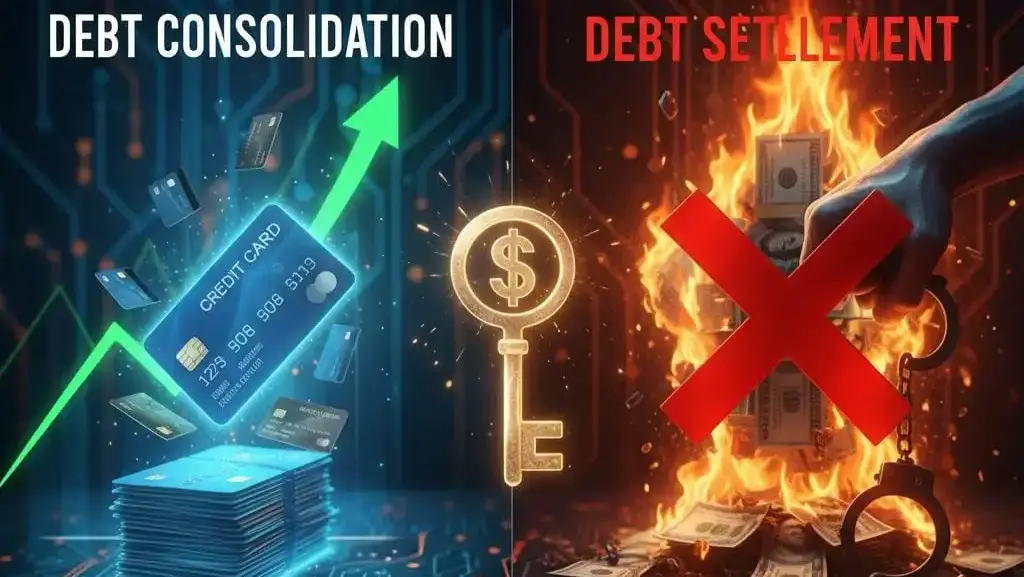
Introduction: The Reality of American Debt in 2026 (The Ultimate Guide to Debt Relief in 2026)
Dealing with debt is a common struggle for many people in the US. It could be credit cards with high interest rates, medical expenses, or personal loans. Managing monthly payments can really limit what you can do with your money.
In 2026, there are some new tools available, but the main question is still: Should you combine your debts into one or try to settle them? This guide will give you the details you need to decide what’s best for you and get back on track.
WHY YOUR CREDIT SCORE IS THE KEY? (Why This is The Ultimate Guide to Debt Relief in 2026)
Before choosing a debt relief path, you must know where you stand. A high credit score can unlock 0% APR consolidation loans, saving you thousands.
1. What is Debt Consolidation? (The Clean Strategy)
Debt consolidation means getting a new loan to pay off all your other debts.
👉 How it Works: Think of it like this: grab a fresh loan, hopefully with a lower interest rate, and use that cash to pay off those credit cards or other debts that are costing you a lot.
👉 The Goal: Instead of juggling multiple due dates and high interest rates, you’ll just have one monthly payment to handle.
👉 Credit Impact: It’s a good thing for your credit score when you pay down debt because it shows you’re handling your credit well and not using too much of it.
2. What is Debt Settlement? (The Hardship Strategy)
Debt settlement, also called debt resolution, involves negotiating with your creditors, either yourself or through a company, to pay them a one-time payment that’s lower than what you currently owe.
-
The Trade-off: Making payments that are less than your total balance can hurt your credit score for quite some time.
-
Who it’s For: People in serious money trouble and about to go broke.
3. Debt Consolidation vs. Debt Settlement: The Deep Comparison
| Feature | Debt Consolidation | Debt Settlement |
| Main Goal | Simplify payments & lower interest | Reduce the total amount owed |
| Credit Score Impact | Positive (in the long run) | Negative (severe damage) |
| Repayment Period | Fixed (usually 2-5 years) | Variable (until settled) |
| Eligibility | Requires decent credit score | Requires financial hardship |
4. Does Debt Resolution Ruin Your Credit?
This is one of the most searched questions by US users. The short answer is:
Yes. Settling a debt usually means you stop paying your creditors. This can hurt your credit score, as it leads to late payment marks and notes that you paid less than what you owed. These negative marks can stay on your credit report for as long as 7 years.
5. Differences Between Credit Counselors and Debt Settlement Firms
Searching for help can be confusing.
-
Credit Counseling: Non-profits usually offer Debt Management Plans (DMPs). While they don’t lower the amount you owe, they can get you a better interest rate. Check out the Debt Relief Guide for 2026.
-
Settlement Firms: For-profit companies that negotiate to reduce the principal balance you owe.
TAKE CONTROL OF YOUR FINANCIAL FUTURE
Don’t let debt settle your future. If you have a score near 800, you are in the top tier for the best consolidation rates in America.
6. Frequently Asked Questions (FAQ)
Q: Is debt solution a good idea?
A: Figuring out the best way to deal with debt relies on your debt-to-income ratio. A professional debt solution is a smart idea if your unsecured debt, like credit cards and medical bills, is over 50% your yearly income, or if you’re struggling to make minimum payments as interest rates go up.
-
The Benefit: You might be able to reduce your interest rates from over 25% to around 8% with debt management plans or nonprofit credit counseling.
-
The Reality: It’s better to find a fix early, before you’re dealing with wage garnishment or getting sued. Sure, some options might ding your credit score a bit at first, but that’s way better than facing bankruptcy or having a bunch of accounts sent to collections.
Q: What is the difference between debt solution and a mortgage?
A: Mortgages and other loans are very different. A mortgage is a ‘secured loan’ for property, where your house is collateral. If you can’t pay, the bank can take your house.
-
Debt Solution: This refers to ways to deal with debt without collateral, such as credit cards or personal loans.
-
The Connection: A lot of people use a cash-out refinance to pay off credit cards with high interest by using their home’s equity. But, it’s risky since you’re turning unsecured debt into debt that’s secured by your house, which means you could lose your home if you can’t pay.
Q: Can I consolidate debt with a low credit score?
A: Yes, When your score dips below 620, the game changes. You might not get a 0% balance transfer card, but you still have choices.
-
Bad Credit Consolidation Loans: In 2026, some fintech lenders work with borrowers who have high-risk profiles. You’ll probably get higher interest rates, somewhere between 18% and 28%. Still, that’s often less than the 30% or higher Penalty APR you see on many credit cards.
-
The Co-signer Option: Having a co-signer with a credit score above 700 can help you get better loan rates and a higher loan amount right away.
-
Collateral-Based Consolidation: Got a car with the title in your name? Some lenders will give you a loan even with bad credit, using your car as security.
Conclusion: Making the Move
In 2026, information is power. If you want to protect your credit score, Debt Consolidation is your best bet. If you are truly underwater, Debt Settlement might be your only escape before bankruptcy.
Always start by checking your credit report to see which doors are open for you.