
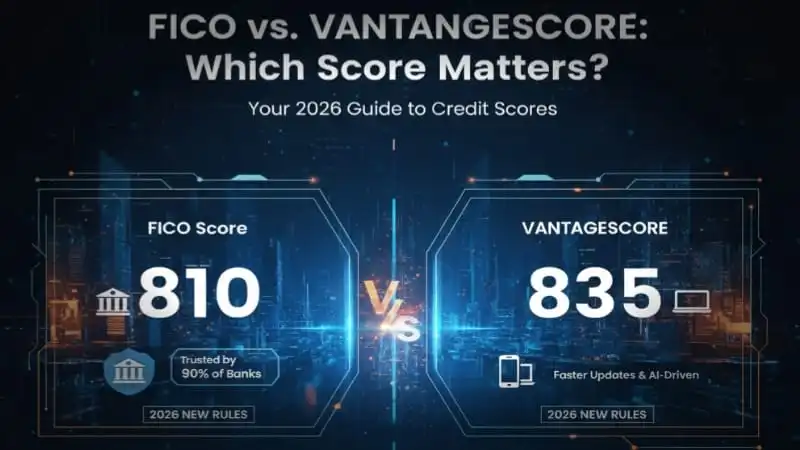
FICO vs VantageScore, It’s common to wonder why credit scores can vary. You might see one score on Credit Karma, say 750, and then a bank tells you it’s actually 710.
No stress, you’re not losing points. It just means you’re seeing different credit scoring models. Since 2026, FICO and VantageScore have become even more different because of new AI. To manage your money well, it helps to know which score is used where.
1. The Real Difference: FICO vs VantageScore
To understand the difference, think of these as two different grading systems for the same student. Both look at your financial “report card,” but they weight your grades differently.
-
FICO (Fair Isaac Corporation): FICO has been around since 1989 and is the go-to model for banks and other old-school institutions. They tend to be careful and don’t change quickly, trusting years of past data.
-
VantageScore: VantageScore came about in 2006 as a team effort by the three major credit bureaus: Equifax, Experian, and TransUnion. It’s meant to be a more up-to-date option that includes more people, using smarter ways to score those who don’t have much credit history.
In short: FICO is the strict professor who values years of consistency, while VantageScore is the tech-savvy analyst who looks at your current trajectory and cash flow.
2. Which Score Do Lenders Use in 2026?
This is where most consumers get confused. The score you see for free online is rarely the score used for a major loan.
Mortgage Loans: FICO is Still the Supreme King
If you’re thinking of buying a house in 2026, pay close attention to your FICO score. Even though Fannie Mae and Freddie Mac are starting to use VantageScore 4.0 over the next few years, most mortgage lenders still check your FICO 2, 4, and 5 scores. A small difference in these particular FICO scores could end up costing you thousands in interest over the life of a 30-year mortgage.
Credit Cards & Auto Loans: The Rise of VantageScore
Good news for credit users: VantageScore is becoming more widely accepted among fintech companies, online lenders, and even car dealerships. People like it because it updates faster. If you pay off a big chunk of credit card debt, VantageScore usually shows that improvement in just a few days. FICO, on the other hand, might take a whole billing cycle to reflect the change.
3. Key Differences in Calculation (FICO vs VantageScore)
The “recipe” for your score varies between these two models. Understanding these weights helps you decide which actions to take first.
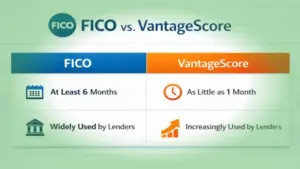
| Feature | FICO Score | VantageScore |
| Minimum History Required | At least 6 months of activity. | Only 1 month of activity is needed. |
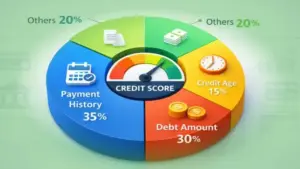
| Payment History Weight | Extremely High (35%). | The Most Influential (41%). |
| Credit Utilization | Heavily penalized if over 30%. | Looks at “Trended Data” (Are you paying it off?). |
| Late Payments | All late payments are treated severely. | Recent late payments hurt more than old ones. |
4. Why Do You Have Two Different Scores?
It is common to see a 20-to-40-point discrepancy between your VantageScore (seen on apps like Credit Karma) and your FICO score (provided by your bank). This happens for three main reasons:
-
Treatment of Collections: VantageScore 4.0 gives you a break after you pay off a debt because it doesn’t consider paid collection accounts. Older versions of FICO might still hurt your score just because an account went into collections, even if you’ve paid it off.
-
Credit Inquiries: When shopping around for a car loan, keep this in mind: FICO treats all credit inquiries within 45 days as one. VantageScore, though, uses a tighter 14-day window. So, if your search lasts three weeks, VantageScore might count that as multiple hits to your credit, while FICO would just count it as one.
-
Data Refresh Rates: VantageScore thrives on real-time data. FICO is more of a “snapshot” taken once a month.
5. Which One Should You Focus On?
My expert advice is simple: Optimize for FICO, and VantageScore will follow.
Since FICO has tougher standards, improving your credit to meet them should also boost your VantageScore. If you just work on your VantageScore, you might get a few extra points from things like reporting your rent or utility bills. But keep in mind that many older FICO versions, which mortgage lenders use, might not consider these factors.
The Strategy for 2026:
-
Monitor your VantageScore weekly to catch identity theft or reporting errors quickly.
-
Check your FICO score monthly (via Experian or your bank app) to know exactly where you stand for major loans.
6. FAQ Section
Is VantageScore accurate?
Yes, it’s very accurate. But keep in mind, what accuracy means for credit scores can change based on who you ask. It correctly shows the data from your credit report, using the VantageScore system. If it’s higher than your FICO score, that doesn’t mean it’s wrong—they just calculate scores differently.
Can I check my FICO score for free?
Yes, that’s right. By 2026, many big credit card companies like Chase, Amex, Discover, and Wells Fargo will let you check your FICO 8 or 9 score for free in their apps. Also, you can get your FICO score without paying through Experian directly.
Does checking my own score lower it?
No, that’s a common misconception in finance. Checking your own credit score, like through an app or your bank, is a Soft Inquiry. Soft checks don’t affect your score at all. Only Hard Inquiries, which happen when a lender checks your credit because you’ve applied for something, can cause your score to dip.
Why did my score drop when I paid off a loan?
This is common with the FICO model. When you pay off an installment loan like a car loan, you lose an open credit line. This can cause a small, short-term drop in your credit score because it impacts your credit mix and average account age. VantageScore usually handles this better, but FICO often reacts more to closed accounts.